
From cable diameter to M size
Measure the actual outer diameter with a caliper in two places; datasheets often differ by 0.5 mm. Then find the gland whose clamping range comfortably covers that size, with your measurement not at the edge of the range. If you are exactly on a boundary, take the smaller gland: it clamps better than an oversized one.
Material: plastic, brass or stainless steel
Polyamide is light, cheap and insulating — fine in a clean control cabinet. Nickel-plated brass keeps its torque better under vibration and provides EMC shielding with a screened cable. Use stainless 316 outdoors, in food processing and under chemical load. Never combine a plastic gland with a steel wall in a location that vibrates daily: the thread works loose.
Reaching the IP rating during installation
An IP68 gland only reaches that rating with the supplied seal between gland and wall, a flat burr-free hole and the correct torque (usually 2.5-5 Nm on M20). Tighten the dome nut until the cable can no longer be moved by hand; tightening further crushes the sheath and actually reduces sealing.
| Size | Clamping range | Hole size |
|---|---|---|
| M12 | 3-6,5 mm | 12,5 mm |
| M16 | 5-10 mm | 16,5 mm |
| M20 | 7-13 mm | 20,5 mm |
| M25 | 11-17 mm | 25,5 mm |
| M32 | 18-25 mm | 32,5 mm |
| M40 | 22-32 mm | 40,5 mm |
Frequently asked questions
- Can one gland hold two cables?
- Only with a dedicated multi-hole sealing insert. Two cables in a standard gland always leave a gap and lose the IP rating.
- Which gland do I use on a protective conduit?
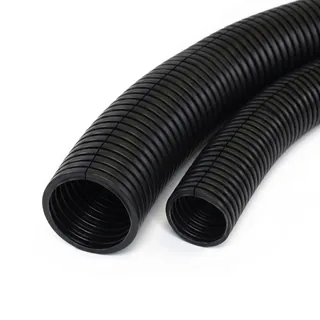
- A conduit fitting matched to the conduit's nominal size, not to the cable diameter. It grips the conduit profile and holds it against pull.
Products from this article
Available from stock, with volume discounts from 10 pieces.

Read next
- Which cable protection conduit to choose: PA, PP or metal?Material, profile and gland system together decide whether a conduit lasts for years. Choose in three steps.
- What do IP ratings mean for cable protection conduits?The two digits explained, plus why a conduit only achieves an IP rating together with its gland.
- How do you calculate nominal size and conduit length?40% fill ratio, bend radius allowance and installed length: the three formulas with real numbers.