
The temperature factor kT
Tables state ratings at 30 °C ambient. As ambient rises, less temperature difference remains to shed heat. For a PVC cable (70 °C conductor) kT is 0.87 at 40 °C, 0.71 at 50 °C and only 0.50 at 60 °C. A cable with 90 °C insulation retains far more at the same ambient.
The grouping factor kB
Cables touching each other heat each other. Two cables in a bundle already give kB = 0.80, five cables 0.60 and ten cables 0.50. Inside a carrier only simultaneously loaded power cables count; sensor cables hardly contribute. Layered routing with spacing gains a full factor step.
What if the result is too low?
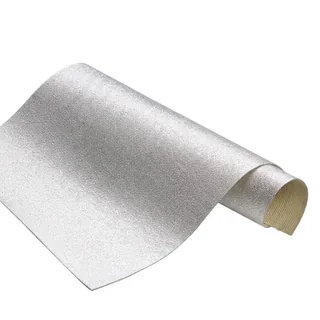
There are four levers: larger cross-section, higher temperature class, better distribution (split the bundle) and active cooling. Compare total cost: one copper size up is usually cheaper than a fan that needs maintenance and can fail. A heat mat only helps against external radiation, not own loss heat.
Verify with a measurement
Verify your result with a thermocouple on the sheath of the hottest cable, in the middle of the bundle, during the heaviest cycle. If sheath temperature stays below the conductor limit minus 10 °C margin, you are fine. Log at least one full production cycle including start-up.
| Ambient | PVC 70 °C | PUR/XLPE 90 °C | Silicone 180 °C |
|---|---|---|---|
| 30 °C | 1,00 | 1,00 | 1,00 |
| 40 °C | 0,87 | 0,91 | 0,97 |
| 50 °C | 0,71 | 0,82 | 0,94 |
| 60 °C | 0,50 | 0,71 | 0,91 |
| 80 °C | — | 0,41 | 0,84 |
| 120 °C | — | — | 0,65 |
Frequently asked questions
- Do these factors also apply inside a cable carrier?
- Yes, and more strictly: air exchange is limited in a closed carrier. Take one step more severe on kB and use separators so power cables do not touch.
- May I ignore derating with a short duty cycle?
- Partly. With a duty cycle under 25% and cycles shorter than the cable's thermal time constant you may use the RMS current, but always keep 10 °C margin.
- Can you verify the cross-section for me?
- Yes. Send current, cable length, ambient temperature, number of simultaneously loaded cables and the cable type; you receive advice on size, type and heat protection if needed.
Products from this article
Available from stock, with volume discounts from 10 pieces.
Read next
- Radiation, conduction and convection: how heat destroys cablesThe heat route you must block determines the material: mat, sleeve or distance.
- How do you protect cables against heat and weld spatter?Continuous versus peak temperature, radiant heat and spatter: which protection type suits which heat source.
- Installing heat protection: air gap, fixing and inspectionA good shield hangs free, is fixed with heat-resistant hardware and is checked annually.