
The air gap does half the work
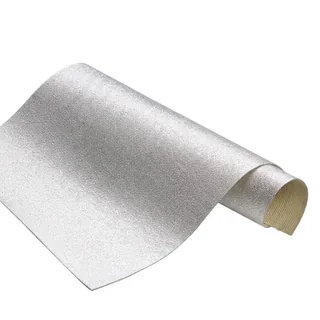
A mat lying against the cable conducts heat through and traps the cable's own loss heat. Keep 20 to 50 mm clearance with spacers or a bracket. The still air in that gap is an excellent insulator and lets the cable shed its own heat.
Fixings that survive the heat
Use stainless band clamps, glass-fibre cord or aramid-based heat-resistant hook-and-loop. Plastic cable ties turn brittle and snap exactly when the shield is most needed. Avoid self-adhesive foil on hot surfaces: the adhesive softens above 120 °C and the shield slips.
Overlap, ends and movement
Overlap sleeves by 50 mm facing away from the heat source so radiation cannot pass the seam. Finish ends with heat-shrink or tape so glass fibre does not fray. On moving parts leave deliberate slack: a tightly fixed sleeve tears on the first cycle.
Inspection and replacement rhythm
Include heat protection in annual maintenance: check for discolouration, embrittlement and powdering of the fabric, verify bands still hold tension and re-measure sheath temperature. Discoloured or dusting mats have lost their reflectivity and protect only half as well.
| Temperature | Fixing | Air gap | Inspection |
|---|---|---|---|
| < 120 °C | Aramide klittenband | 20 mm | Jaarlijks |
| 120–250 °C | RVS-band 9 mm | 30 mm | Halfjaarlijks |
| 250–400 °C | RVS-band + koord | 40 mm | Kwartaal |
| > 400 °C | Beugelconstructie RVS | 50 mm | Maandelijks |
Frequently asked questions
- Can I cut a heat mat to size myself?
- Yes, with glass-fibre shears and gloves; finish the cut edge with heat-resistant tape so fibres do not shed.
- How long does a heat sleeve last?
- Used continuously near its limit expect two to three years; with generous margin and an air gap often more than ten years. The coating determines service life, not the fabric.
- Can you assess the setup?
- Yes. Send photos, measured temperatures and the distance to the heat source; you receive a proposal for shield, sleeve and fixings.
Products from this article
Available from stock, with volume discounts from 10 pieces.

Read next
- Radiation, conduction and convection: how heat destroys cablesThe heat route you must block determines the material: mat, sleeve or distance.
- Calculating derating at high ambient temperatureTwo factors, one formula: how much current remains at 55 °C with ten cables side by side?
- How do you protect cables against heat and weld spatter?Continuous versus peak temperature, radiant heat and spatter: which protection type suits which heat source.