
Choose your delivery country
Ships today when ordered before 15:00 CETShips today when ordered before 15:00 CET
Wisman Group

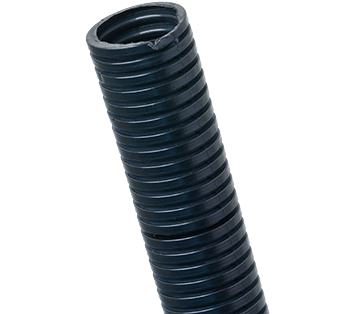
Polyamide 12 — Reiku

Polyamide 12 by Reiku: the complete cable protection hoses series, available from stock.

All 13 articles of the Polyamide 12 are listed below with full technical data. This cable protection hoses series can be ordered online; Not sure about the right size or bend radius? Our engineers are happy to calculate your application.

13 articles in this seriesAll cable protection hoses

  • Ordered before 15:00, shipped the same day
  • Datasheet and STEP file with every article
  • Technical advice from a design engineer

About the Polyamide 12 series

Protective conduit for outdoor use, cold, and moisture: PA12 with low moisture absorption and high UV resistance.

Polyamide 12 absorbs virtually no moisture, retaining its properties in wet environments, outdoors, and in freezing temperatures. Where PA6 can become stiff or brittle, a PA12 protective conduit remains flexible and dimensionally stable.

The conduit is UV-resistant, halogen-free, and resistant to many oils and cleaning agents. It is used with the same connectors as PA6, allowing you to easily choose the right material per zone within a single installation.

Key strengths

  • Very low moisture absorption: dimensionally stable in wet environments
  • UV-resistant and suitable for outdoor installation
  • Remains flexible in freezing temperatures
  • Good resistance to oils and cleaning agents

Typical applications

  • Outdoor installations and infrastructure
  • Food and beverage industry with washdown/wet cleaning
  • Cold storage and freezing facilities
  • Vehicle and rail engineering

13 articles

All about cable protection hoses

Technical guidance from our engineers: how to choose, what to measure and where installations fail in practice.

Nominal width, inner diameter and fill ratio

Protective hoses are designated by a nominal width (NW) that roughly matches the inner diameter. Add up the outer diameters of all cables, multiply by 1.3 to 1.5 for movement and pulling, and pick the next NW above that. A hose chosen too wide rattles and chafes internally; one chosen too tight makes pulling in almost impossible and sharply increases bending force.

Profile, material and protection rating

A corrugated profile is light and flexible; a smooth or reinforced hose withstands more pressure and mechanical impact. Polyamide is the workhorse for machine building, polypropylene is more chemically resistant, and metal-reinforced or glass-braided versions handle high temperatures. The IP rating always applies to the complete system: hose plus gland plus a correctly tightened seal.

Glands and installation

Match the gland to the hose: same NW, same manufacturer series and a metric or NPT thread that suits the enclosure wall or motor housing. Use the correct cut-out diameter with a lock nut or sealing washer, and on moving axes always let the hose follow the manufacturer's bend radius — no tighter. Hose from the reel may be cut to length; cut square so the gland grips properly.

Frequently asked questions

The questions our technical desk receives most often about this category.

Why choose PA12 when PA6 is cheaper?

Because PA6 degrades more quickly outdoors and in wet or cold environments. In those conditions, PA12 remains flexible and dimensionally stable for years, preventing replacements and breakdowns. For dry indoor applications, PA6 is usually sufficient.

Do the same connectors fit on PA6 and PA12?

Yes. Both materials are supplied in the same profiles and nominal sizes, making connectors and cable glands interchangeable.

Is PA12 protective conduit resistant to cleaning agents?

It is resistant to most industrial cleaners and oils. For aggressive chemicals or high concentrations, please consult our technical advisors using the product data sheet.

How do I choose the right size of cable protection hoses?

Start with the fill: the thickest cable sets the minimum inner height, the sum of all diameters plus 10% clearance sets the inner width. Then pick a bend radius of at least ten times the thickest cable diameter. Filter on those three values on the left and only suitable articles remain.

What is the lead time and when do you ship?

Articles marked 'in stock' ship the same working day when ordered before 15:00 CET. Articles 'on request' are made to order at the manufacturer; the lead time is stated in the quotation, typically 5 to 15 working days.

Do I get technical documentation and CAD files?

Yes. Every article lists a datasheet, a manual and a STEP file for your 3D model. All are free to download, no account required.

Are the prices volume prices?

The price shown is per unit. From the indicated tier quantity onwards the lower price applies automatically and is calculated in the cart. Use the toggle at the top to show prices including or excluding VAT.

Which gland matches which hose size?

The gland follows the hose's nominal width (NW) and manufacturer series. NW17 therefore takes an NW17 gland from the same series; the thread size (M, PG or NPT) is chosen for the enclosure wall. Mixing hoses and glands from different manufacturers almost always leaks.

Can a protective hose run inside a cable carrier?

Yes, provided the hose meets the carrier's bend radius and has its own chamber. Count the hose's outer diameter in the fill ratio; it is considerably larger than the cable itself.

Can hose from the reel be cut to length?

Yes, we supply per metre from the reel and cut to the length you specify. State the length per piece so you receive continuous pieces rather than remnants.

Didn't find what you were looking for?

We'll prepare a tailored quote. Fill in the quote form and you'll receive a matching quote by email within 3 hours on working days.

Request a quote

Also known as

These products go by several names in the market. If you searched for any of these terms, you are in the right place:

  • cable protection hose
  • protective conduit
  • corrugated conduit
  • flexible conduit
  • cable sleeve hose
  • cable protection tube